
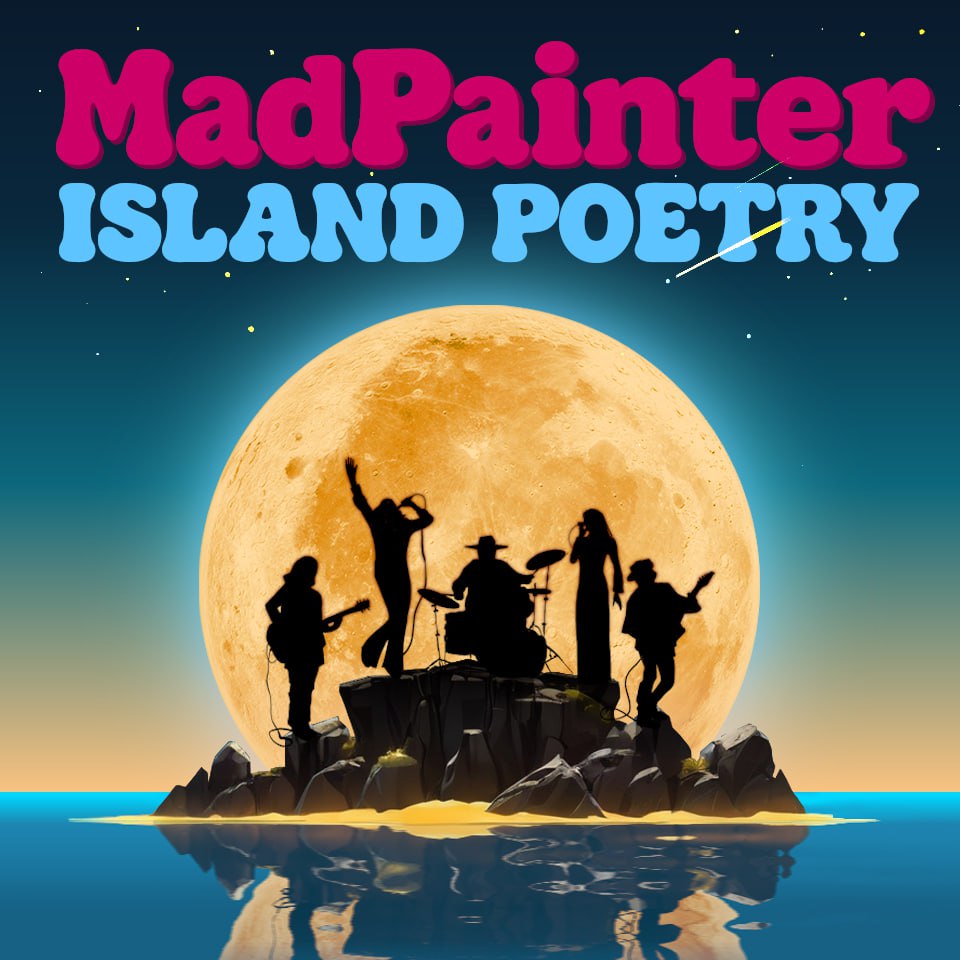
There is something wonderfully defiant about an album that believes rock music should still sound big. In an era when production can so easily smooth away the rough edges of performance, Mad Painter’s Island Poetry arrives with Hammond organs that seem built to fill a room, electric guitars that demand space, firm bass lines, muscular drumming, and melodies that refuse to disappear after the song has ended. Yet the Boston-based band is not simply dressing itself in the clothing of the 1970s and pretending the decades in between never happened. Instead, Island Poetry understands why the music of that period continues to resonate: it had physical presence, strong personalities, memorable songwriting, and a willingness to let musicians sound like musicians. Across twelve tracks, Alex Gitlin and his current lineup create an album that moves through hard rock, progressive rock, glam, melodic rock, boogie, art rock, and spacey experimentation while retaining a recognizably unified identity. Gitlin’s keyboard work is particularly important to that identity. The Hammond organ is not a decorative period detail tucked behind the guitars; it is frequently the architectural center of the music, giving the songs weight, movement, and a distinctive sense of drama. Al Hendry’s drums, Kenne Highland’s bass, Al Naha’s guitar, and the layered contributions of Sharon Crumrine and Julie Gee on backing vocals complete a full-band sound that feels deliberately alive. There is warmth in the production, too, reflecting the album’s analog-minded aesthetic and allowing the arrangements to breathe rather than reducing everything to a wall of compressed sound.
The title Island Poetry suggests escape, but not necessarily isolation. Its central image is an imagined group of island inhabitants gathered around a campfire on a tropical beach beneath a full moon, chanting, meditating, and participating in a communal ritual of creativity. That setting gives the album an intriguing conceptual backdrop because the “island” becomes less a geographical destination than a state of mind: a place where everyday pressures can be temporarily abandoned and imagination can take over. There is an appealing romanticism to that idea, recalling artists such as Kevin Ayers, whose own retreat from conventional surroundings became part of his creative mythology. Mad Painter translates that notion into rock music rather than dreamy escapism. Their island is loud. It has amplifiers, Hammond speakers, guitar solos, pounding drums, and choruses that invite the audience to shout back at the stage. That contrast is part of the record’s charm. The band imagines stepping away from modern life, but it does not retreat into quietness. Instead, it celebrates the freedom to make music with conviction. Island Poetry therefore feels less like a nostalgic recreation of a particular decade and more like an argument for preserving a certain creative attitude: take the song seriously, let the musicians play, embrace eccentricity, and do not be afraid of scale. The tropical imagery gives the album its poetry, while the rock arrangements give that poetry its electricity.
One of the album’s greatest strengths is the way Mad Painter allows different influences to become starting points rather than destinations. “Debt Collector” and “Suit of Worries” carry the unmistakable gravitational pull of Deep Purple, particularly through their Hammond-heavy attack, but they are not merely exercises in imitation. “Empty Bottles” shifts into a looser boogie-rock vocabulary reminiscent of Status Quo, while “Spin Your Ventilator,” the focus track, turns up the voltage with an unruly hard-rock charge that recalls the Brian Johnson era of AC/DC. Its double-entendre-driven attitude gives the song a mischievous quality, but the music underneath it is anything but lightweight. The guitars hit with purpose, the rhythm section keeps the track moving with relentless energy, and the Hammond contributes another layer of propulsion. Elsewhere, “Last Night You Dreamed I Was in Love with Someone Else” leans toward Rainbow’s dramatic melodic rock, while “Shadow of the Words” taps into Queen’s theatrical instincts. “Two Horsemen” explores the spacious, interlocking guitar approach associated with Wishbone Ash, giving the record another dimension. These stylistic shifts could easily have made Island Poetry feel like a collection of disconnected tribute pieces, but Mad Painter’s songwriting and shared instrumental character keep the album cohesive. The Hammond remains an important connective tissue, as does the band’s preference for strong melodic shapes. Even when the musical vocabulary changes, the songs still sound as though they belong to the same world.
That variety becomes even more rewarding as the album moves into stranger territory. “Nektarized” introduces a space-disco atmosphere that evokes Ganymed, taking the listener away from the smoky club and toward something more cosmic and synthetic without abandoning the album’s underlying rock sensibility. “I Am the King” brings in the more expansive art-rock sensibility associated with the Moody Blues and Barclay James Harvest, suggesting that Mad Painter’s understanding of classic rock extends beyond riffs and volume into atmosphere and arrangement. “Stand Your Ground,” meanwhile, carries a tougher edge, drawing from the heavier world of Motörhead. These tracks demonstrate that Island Poetry is not interested in making every song conform to the same template. Instead, the album works because its contrasts are intentional. The musicians understand that classic rock was never one sound in the first place. It was a broad language capable of moving from blues-rooted heaviness to progressive ambition, theatrical pop-rock, boogie, glam, and experimental space music without necessarily losing its identity. Gitlin’s keyboards are central to that flexibility, but so is the band’s willingness to leave room inside the arrangements. The guitars can stretch out. The bass has enough presence to function as more than a low-end shadow. The drums retain their physicality, while the layered vocals add another dimension to the choruses and dramatic passages. Rather than overwhelming the listener with complexity, Mad Painter gives individual parts enough room to register, creating the pleasing sensation of hearing a group interacting in real time.
The songwriting is equally important because Island Poetry would not have the same staying power if its instrumental references were the only attraction. Six of the twelve songs feature lyrics written by Dmitry M. Epstein, and his contribution brings wit, personality, and vivid dramatic imagery into the band’s expansive arrangements. His words do not simply sit on top of the music; they become another part of the album’s theatrical character. Titles such as “Debt Collector,” “Suit of Worries,” and “Shadow of the Words” immediately suggest worlds beyond their literal phrases, giving the listener an invitation to imagine the characters and situations contained within them. That sense of imagination suits the album’s island concept particularly well. There is room here for humor, tension, fantasy, swagger, and absurdity, all of which can coexist within a record that remains fundamentally committed to rock songwriting. “Tommy Lost It All” is especially valuable in that context because it represents Mad Painter’s own established musical personality rather than functioning primarily as a signpost toward another band. And then there is “Circle of Hands,” the album’s interpretation of the Uriah Heep classic. Closing with that song is more than a nod to an influence; it functions as a final acknowledgment of the musical lineage that helped shape Mad Painter’s sound. After spending the album moving through different corners of classic rock, the band ends by returning to one of the traditions closest to its heart: the powerful union of Hammond organ, guitar, melody, and dramatic vocal arrangement.
Much of Island Poetry succeeds because its recording philosophy supports the music instead of competing with it. Tom Hamilton recorded the tracks at Lowell Street Sound in Peabody, Massachusetts, while also handling production and mixing, using Pro Tools-based sessions to pursue something warmer and more natural than the sterile digital polish that can sometimes make contemporary rock feel strangely weightless. That approach is well suited to Mad Painter because these songs depend on texture and interaction. A Hammond organ needs to sound substantial; a guitar needs enough room for its character to emerge; drums should feel like drums rather than perfectly isolated samples; and backing vocals should enrich the arrangement without becoming a glossy layer of anonymous sound. The result is a production aesthetic that acknowledges modern recording technology while preventing it from erasing the performers’ personality. This is particularly important for an album so rooted in the idea of a band playing together. Island Poetry wants the listener to feel the presence of people making music, not simply hear a sequence of perfectly assembled tracks. That warmth also helps explain why the album can move between styles without sounding excessively clinical. There is enough air around the instruments for each song to establish its character, while the overall sound remains connected. In that sense, the recording reinforces the album’s central philosophy: classic rock is not defined merely by vintage equipment, oversized riffs, or references to famous bands. It is defined by the conviction that performance, melody, dynamics, and personality matter.
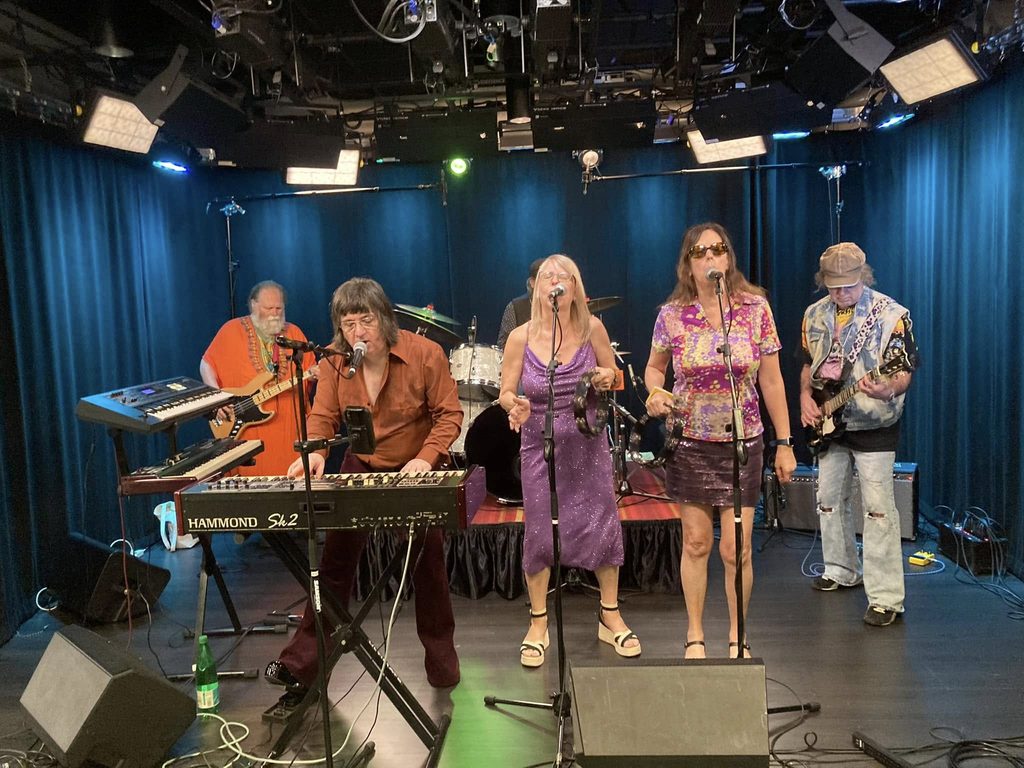
Ultimately, Island Poetry is best understood not as a museum piece devoted to the 1970s, but as a contemporary band’s enthusiastic conversation with a musical tradition that still has plenty of life left in it. Mad Painter knows their references and isn’t shy about showing them, but the record’s real achievement is how those influences become ingredients in something more personal. Deep Purple, Uriah Heep, Rainbow, Queen, Wishbone Ash, AC/DC, Motörhead, the Moody Blues, Barclay James Harvest, Status Quo, and space-rock traditions all leave fingerprints across the album, yet the finished record belongs to Mad Painter. Alex Gitlin’s songwriting and Hammond work provide the foundation, while Hendry, Highland, Naha, Crumrine, and Gee help turn it into something muscular and communal. The album’s imaginary island becomes an appealing metaphor for what the band itself is doing: stepping away from the pressure to follow whatever sound happens to be fashionable and gathering around a musical fire of its own. There is joy in that decision. There is also craft. Island Poetry understands that great rock can be heavy without being mindless, melodic without becoming predictable, theatrical without losing sincerity, and nostalgic without surrendering its present tense. Most importantly, it remembers that rock was always supposed to move air. Turn this album up, and the Hammond starts pushing through the speakers, the guitars begin to occupy the room, the rhythms gather momentum, and the songs reveal their purpose. Mad Painter is not claiming that the 1970s have returned. They are making a more convincing statement: the essential qualities that made great rock endure never really left.
For more information, follow MAD PAINTER
WEBSITE – FACEBOOK – TWITTER – SPOTIFY – YOUTUBE