

Grief can make the past feel painfully distant, as though the people who shaped us belong to a world we can visit only through memories. On Dedication, Ukrainian Crimean Tatar pianist and composer Usein Bekirov finds another way to approach that distance. Written following the death of his father, Riza Bekirov, in the spring of 2026, the album is a deeply personal tribute that refuses to remain trapped in sorrow. Instead, its eight original compositions transform remembrance into something active, expansive, and unmistakably alive. This is music that understands loss without surrendering to stillness, finding room for tenderness, exuberance, contemplation, and rhythmic fire within the same emotional landscape. Riza was a classically trained cellist and pianist whose work in ethno-jazz helped shape his son’s understanding of musical tradition as a living language rather than a fixed collection of inherited rules. That influence runs through Dedication, informing a record that brings Crimean Tatar and Ukrainian musical identities into conversation with contemporary jazz, fusion, funk, and sophisticated ensemble writing. The result feels less like a conventional memorial than an ongoing exchange between generations, with Bekirov using the instrument and artistic vocabulary he inherited to express something uniquely his own. The album’s emotional strength comes from this balance: the music honors the father without attempting to preserve him as a distant, untouchable figure. Instead, his influence seems to move through every composition, transformed by the experiences, discoveries, and creative choices of the son who continues the conversation.
Across “Bear Mountain,” “Skybins Portrait,” “Delusion,” “June,” “Crazy Heads,” “Today,” “Zurag,” and “Maiden Voyage,” Bekirov demonstrates a remarkable ability to move between contrasting musical environments without losing the album’s underlying sense of identity. Contemporary jazz provides the foundation, but the arrangements are rarely content to stay in one place. Fusion introduces intricate interplay and flashes of technical brilliance, funk gives the music a physical, forward-driving pulse, and the more contemplative passages create space for reflection without allowing the emotional atmosphere to become monotonous. That variety matters because grief itself is rarely a single, uninterrupted feeling. A memory can arrive with tenderness, then unexpectedly trigger laughter; an absence can feel unbearable one day and strangely peaceful the next. Dedication reflects that complexity through its changing energy, allowing its compositions to breathe, stretch, and occasionally erupt. The rhythmic vitality is particularly important. Rather than treating remembrance as an invitation to slow everything down, Bekirov recognizes that music can honor the dead through movement as much as through quiet reflection. There is a sense of life pushing forward even in the moments when the mind returns to what has been lost. The album’s technical demands are considerable, but complexity never becomes an end in itself. Intricate arrangements and instrumental exchanges serve the broader emotional design, creating a record that rewards attentive listening while remaining inviting to anyone drawn to expressive, adventurous jazz. Its sophistication feels purposeful, with each shift in texture or momentum contributing to a larger musical conversation.
The international ensemble assembled around Bekirov is extraordinary, yet one of the album’s greatest achievements is the way its musicianship serves the compositions rather than competing for attention. Produced by Randy Jackson, Robert L. Smith, and Victoria Kohana, Dedication features an impressive roster that includes drummers Vinnie Colaiuta and Chris Dave, bassist Hadrien Feraud, trumpeter Keyon Harrold, saxophonists Kenneth Whalum, Eric Marienthal, and Wayne Escoffery, trumpeter Rick Braun, and additional contributors Yakiv Tsvietinskyi, Bar Filipowicz, and David Hawkins. Such a gathering of accomplished players could easily turn a personal tribute into an all-star showcase, with every performer seemingly obliged to outdo the last. Bekirov avoids that trap by giving the music a strong compositional center. The players bring distinctive personalities, but those individual voices remain connected to the larger design. Colaiuta and Dave offer contrasting rhythmic approaches, creating different kinds of propulsion and interaction rather than simply providing a dependable pulse. Feraud brings extraordinary fluidity and precision to the low end, helping anchor passages that might otherwise threaten to drift into pure technical display. The horns contribute brightness, urgency, and tonal richness, expanding the arrangements without overwhelming their emotional core. What makes these performances compelling is not merely the musicians’ ability to play difficult material, but their willingness to listen, respond, and build something collectively. There is a genuine conversational quality to the ensemble work, as though every instrumental voice has something meaningful to contribute and understands when another voice needs room. The album’s virtuosity is undeniable, but its generosity is even more impressive.
At the center of this musical universe stands Bekirov himself, whose piano and keyboard performances provide both direction and emotional continuity. His playing can be lyrical and spacious, allowing a melody to unfold with patience before shifting into assertive rhythmic figures that tighten the music’s momentum. He understands the expressive possibilities of contrast: a delicate phrase can carry considerable emotional weight precisely because it is not surrounded by constant intensity, while a sudden surge of energy can feel liberating after a stretch of introspection. This sensitivity keeps the album from becoming an exercise in technical display, even when the arrangements grow dense or the ensemble reaches its most exhilarating passages. Bekirov is clearly comfortable operating within the demanding language of contemporary jazz, but his performances also reveal a composer attentive to what a musical moment needs. He does not need to dominate every section to maintain control; his authority emerges from the construction of the pieces and the way their elements relate. His established career, which has included collaborations with musicians such as Mike Stern, Randy Brecker, Dennis Chambers, Frank Gambale, Bill Evans, Ibrahim Maalouf, and Michael League, provides a broader context for the album’s sophistication. Yet Dedication feels significant for reasons that go beyond professional accomplishment. Here, the technical knowledge accumulated through years of performance becomes a means of expressing something intimate and irreplaceable. The piano is not simply the instrument through which Bekirov demonstrates his skill. It becomes a voice through which he can explore a relationship that has changed form but has not lost its influence.
The album’s Crimean Tatar and Ukrainian foundations deepen that personal expression, giving Dedication a cultural dimension that feels integral rather than ornamental. Bekirov does not treat heritage as a collection of musical gestures to be inserted into otherwise conventional jazz arrangements. Instead, those influences inform the compositions’ melodic contours, rhythmic character, and emotional architecture, allowing tradition to participate in the music’s development. This distinction is important. Cultural identity can easily become a superficial marker, especially when an artist works across international genres and collaborates with musicians from different backgrounds. Bekirov’s approach suggests something more organic: musical inheritance is not a boundary that prevents experimentation but a source of knowledge from which new possibilities emerge. His father’s involvement in ethno-jazz offers a meaningful connection here, as Riza’s understanding of tradition as something adaptable appears to have passed into his son’s artistic philosophy. Contemporary jazz, fusion, and funk do not erase the album’s origins; they provide additional languages through which those origins can speak. The result feels borderless without becoming anonymous. There is a strong sense that the music belongs to a particular artistic and cultural history, even as its expressive vocabulary reaches beyond national or generational boundaries. That balance gives the album a significance extending beyond the circumstances of its creation. Dedication becomes a statement about what it means to inherit a culture, to carry it into unfamiliar musical territory, and to allow it to evolve without losing the qualities that make it meaningful. In that sense, the album’s exploration of heritage mirrors its treatment of grief: both involve preserving something valuable by allowing it to continue changing.
What makes Dedication especially moving is its refusal to present mourning as an emotional destination. The album acknowledges the pain of losing a parent, but it also recognizes the many ways a person can remain present through the knowledge, habits, values, and creative instincts they have passed on. Riza Bekirov’s legacy is heard not simply in the decision to make this record but in the very way his son approaches music: with respect for tradition, an appetite for exploration, and an understanding that different influences can coexist without cancelling one another out. The album’s more reflective moments invite contemplation, while its funk-driven passages and energetic ensemble exchanges insist that remembrance can also be joyful. That interplay prevents the tribute from becoming emotionally narrow. Instead of freezing his father in an idealized past, Bekirov honors the influence that continues to shape his present. There is something quietly profound about hearing an international group of musicians participate in that act of remembrance. A deeply personal relationship becomes the starting point for a wider conversation connecting Crimean Tatar heritage, Ukrainian identity, contemporary jazz, and the shared language of musical collaboration. Each performer adds something individual, yet the collective sound reinforces the idea that a legacy grows through the people who carry it forward. The album’s most affecting achievement may therefore be its ability to make grief feel dynamic. Loss remains real, but it does not prevent movement, discovery, or moments of genuine exhilaration. In Bekirov’s hands, the music becomes a way to acknowledge absence while celebrating everything that absence cannot erase.
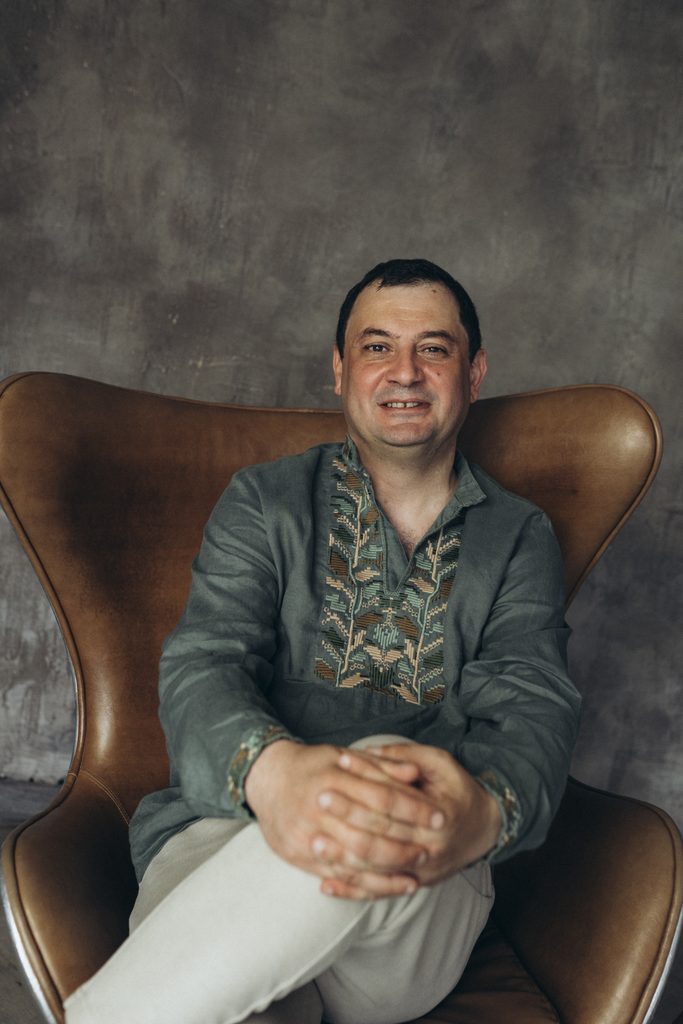
Ultimately, Dedication is an accomplished and emotionally resonant album whose greatest strength lies in the connection between its musical ambition and its deeply personal purpose. The eight compositions offer an engaging journey through contemporary jazz, fusion, funk, and more introspective territory, while the remarkable ensemble brings color, complexity, and rhythmic vitality to Bekirov’s writing. Yet the record’s lasting impact does not depend on its prestigious personnel or technical achievements alone. Those qualities matter because they help bring its central idea to life: that the music we inherit can become something new without ceasing to honor where it began. Bekirov has created a work that remembers his father without allowing remembrance to become an exercise in looking backward. Riza’s influence is carried forward through every compositional decision, every expressive piano phrase, and every moment in which the ensemble transforms individual contributions into a shared musical statement. That is what makes the title so fitting. Dedication is not merely an offering to someone who has died; it is a declaration of what the living choose to do with the gifts they have received. Bekirov takes the musical foundation his father helped establish and expands it across genres, traditions, and generations, creating a personal language that remains open to the world. The result is adventurous, soulful, occasionally explosive, and consistently purposeful. Above all, it feels alive. Riza Bekirov may be the person being remembered, but his presence is woven into a record that celebrates the enduring power of artistic inheritance. With Dedication, Usein Bekirov reminds us that a legacy is not preserved simply by looking back at what someone gave us. It survives when we carry that gift forward and allow it to become something beautiful.
For more information, follow USEIN BEKIROV
WEBSITE – SPOTIFY – YOUTUBE – INSTAGRAM