
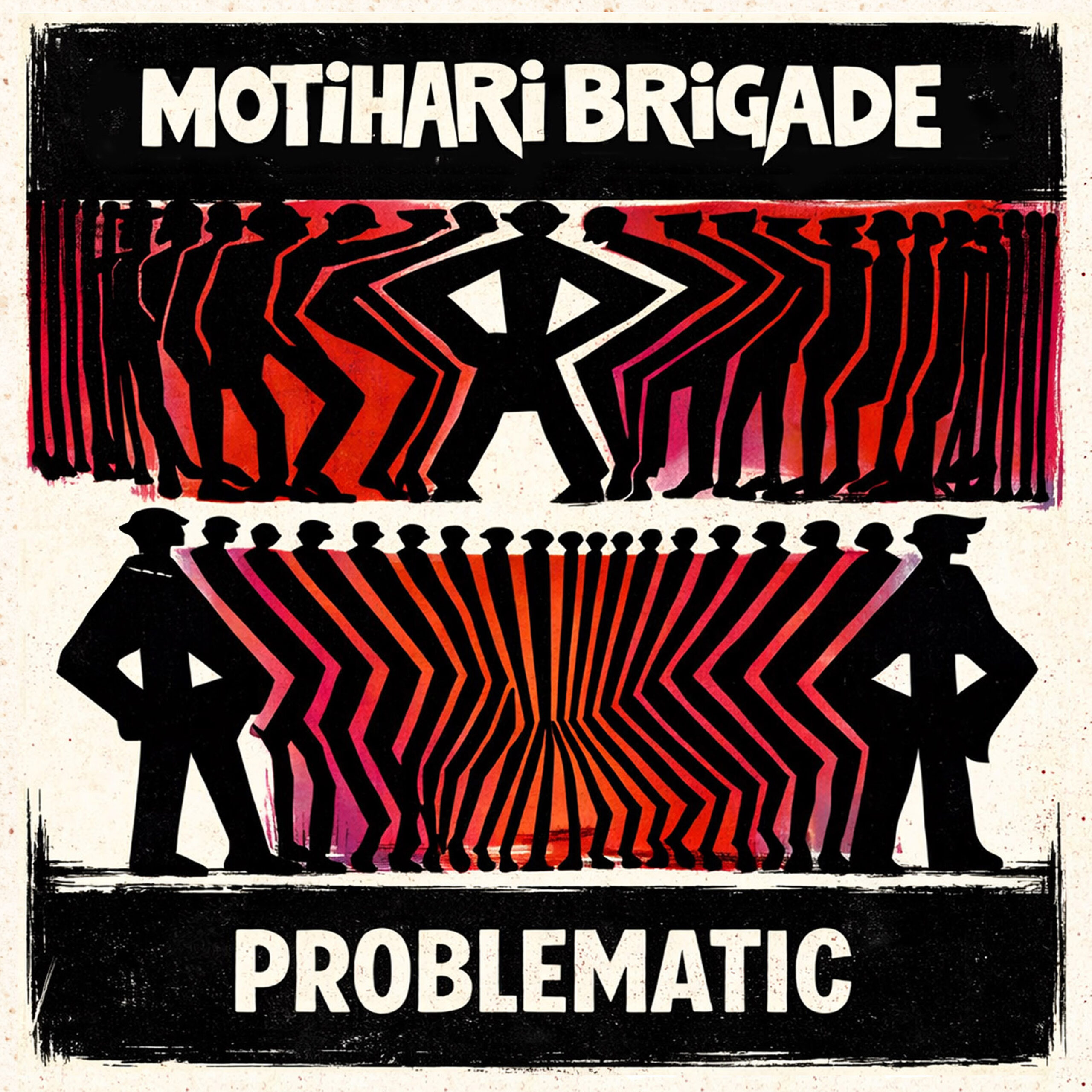
Some of the albums are engaging, while others require the listener to put away familiar modes of thinking. The problematic nature of the Motihari Brigade is squarely in the latter category. The album, based around psychedelic rock and classic power-pop, progressive arrangements, and sharp lyrical commentary, plays as an ambitious exploration of conformity, technology, politics, personal responsibility, and the importance of independent thought. Instead of giving easy answers, the band gives listeners conversations that deliberately have no easy answers and invite reflection rather than demand agreement. Problematic is a well-made concept album that rewards listening closely, with musical motifs and philosophical ideas returning to bind each chapter together. Motihari Brigade are always up for tackling difficult topics, but never at the cost of memorable songwriting, infectious hooks, or a distinct sense of theatrical rock energy.
“Cowboy Armageddon” is a short but atmospheric psychedelic intro that instantly immerses the listener in the surreal world of the album and kicks off the trip. Rather than a standalone, it’s the gateway into the title track, “Problematic,” where the overarching philosophy of the album starts to become apparent. The song opens with the provocative statement, “I’m problematic, baby; don’t fit inside the box. I’m problematic, baby; an enigmatic paradox,” setting forth a manifesto of individualism over blind conformity. The swaggering guitar work, swirling production, and hypnotic rhythmic pulse are perfectly matched to the lyrical message: independence here is not rebellion for rebellion’s sake, but rather a commitment to authenticity. Rather than portraying unorthodox thinkers as outsiders to be feared, the song suggests that questioning established narratives is necessary and valuable. It is an exciting opening statement that sets the emotional and intellectual tone for what follows.
The album’s most inventive moment is “Chatbot Don’t Like It,” a witty marriage of satire, power-pop, and science-fiction aesthetics that explores humanity’s ever more complex relationship with automated systems and artificial intelligence. The song never turns technophobic, but rather it humorously highlights the limitations of algorithms when faced with real individuality and human nuance. The spoken-word virtual assistant built into the arrangement is an inspired creative device, adding theatrical charm while reinforcing the main idea. The addition of a “Radio Clean Edit” afterwards only extends the joke, with the censorship itself becoming part of the artistic statement. It’s that self-awareness that marks out the confidence of Motihari Brigade as songwriters who understand how to employ humor as a vehicle for social observation that means something. The playful production and layered harmonies and irresistible melodic hooks keep the message accessible without becoming too didactic.
The second part of Problematic widens its horizon but with impressive cohesion. “Save Ourselves” opens with the grandeur of classic arena rock before expanding into something delightfully theatrical, evoking the flamboyant spirit of The Rocky Horror Picture Show while retaining echoes of Queen’s dramatic vocal arrangements. The song does not call for salvation through outside leaders but for personal responsibility and independent action. “Not What They Seem” continues in a similar vein, urging listeners to dig beneath the surface and question the assumptions that society so often takes for granted. The previously released single “The Great Refusal” acts as an emotional pivot, as an act of hope, not anger, offering defiance to manipulation. Motihari Brigade keeps a constant equilibrium between heady subject matter and dynamic instrumentation on these songs, proving that philosophical songwriting can coexist with musical excitement and accessibility.
The album’s biggest artistic ambition is perhaps the expansive pairing of “Heedless Of The Storm” and “Ten Years Time.” Together they work almost like a prog rock suite, examining themes of war, propaganda, historical memory, and the ambiguity of accepted narratives. “Heedless Of The Storm” comes in the form of asking questions rather than giving definitive answers, letting the listener grapple with complex thoughts alongside the music itself. After an extended instrumental passage of contemplation, the song flows into its Americana-inspired guitar textures, subtle percussion, and breathtaking saxophone passages that evoke a quieter but equally profound atmosphere. The long arrangements never seem self-indulgent, because each musical step reflects the emotional trajectory occurring in the lyrics. The songs reveal the band’s desire to be patient and expansive, trusting that the audience can comprehend concepts that unfold over time instead of offering immediate satisfaction.
That reflective sequence segues naturally into Motihari Brigade’s take on “Fortunate Son,” a choice that seems wonderfully apt within the broader conceptual framework. The perennial critique of privilege and unequal sacrifice heightens themes already explored and correlates contemporary concerns with historical realities. The song doesn’t seem like a stand-alone cover version so much as it does another chapter in the album’s ongoing conversation about power, accountability, and the effects of political decision-making. From there, “Pleasure Craft” turns its gaze to contemporary consumer culture and technological dependency. The song is built around one of the album’s most immediately engaging grooves and seduces with catchy melodies, while at the same time questioning the comforts that increasingly dominate everyday life. Instead of preaching about digital addiction, it encourages us to consider how convenience itself can be subtly controlling, making its message all the more effective.
The record’s last moments return to its central motif with new emotional weight on “Problematic (Reprise).” With its return to familiar musical themes after the intellectual journey of the preceding tracks, the reprise underscores the album’s central argument: independent thinking should never be mistaken for hostility or danger. The repeated lyrical fragments feel less like pronouncements than reflections molded by everything that came before. It’s that cyclical storytelling that lends Problematic some impressive structural integrity—rewarding those who listen to the album as a complete work, not just as a collection of isolated singles. The recurring motifs provide continuity and remind us that questioning certainty is a process. It’s a beautiful reminder that wisdom often starts with admitting you don’t know for sure.
The final track, “Someone’s Dream,” is a beautifully measured finish, trading confrontation for contemplation. With the album’s many philosophical debates, dreamlike textures, cinematic arrangements, and gentle melodic development, it creates an atmosphere of acceptance and emotional warmth. The song is a meditation on memory, relationships, and the enduring imprint that people leave on each other, suggesting that human connection is ultimately more durable than ideological conflict. The hopeful refrain is almost meditative, allowing the listener to leave the album with a new perspective instead of a feeling of exhaustion. This emotional balance is one of the greatest strengths of Motihari Brigade—while addressing complex social themes, the band never loses sight of the deeply personal experiences that connect people, despite differing beliefs and perspectives.

Ultimately, Problematic works because it won’t condescend to its audience. Motihari Brigade has created a record that entertains with memorable melodies, inventive arrangements and brilliant musicianship, and simultaneously invites thoughtful reflection on the world we live in. The album’s combination of psychedelic rock with progressive experimentation, classic power-pop, theatrical performance, and philosophical lyricism makes for a listening experience that feels refreshingly ambitious in an age often ruled by immediacy. The album celebrates curiosity, skepticism, empathy, and the brave independence of thought rather than demanding conformity. Whether it’s the biting satire, the expansive musical landscapes, or the deeply human closing reflections, listeners will connect to something. “Problematic” is an engaging, intelligent, and emotionally rewarding body of work that begs for repeated listening. You find new lyrical nuances and musical details with each listen. Motihari Brigade succeeds as artists who dare to push boundaries but who are also utterly captivating entertainers.
For more information, follow Motihari Brigade:
WEBSITE – FACEBOOK – SPOTIFY – YOUTUBE – BANDCAMP – TWITTER